
By Gabriela Milián Calzadilla.
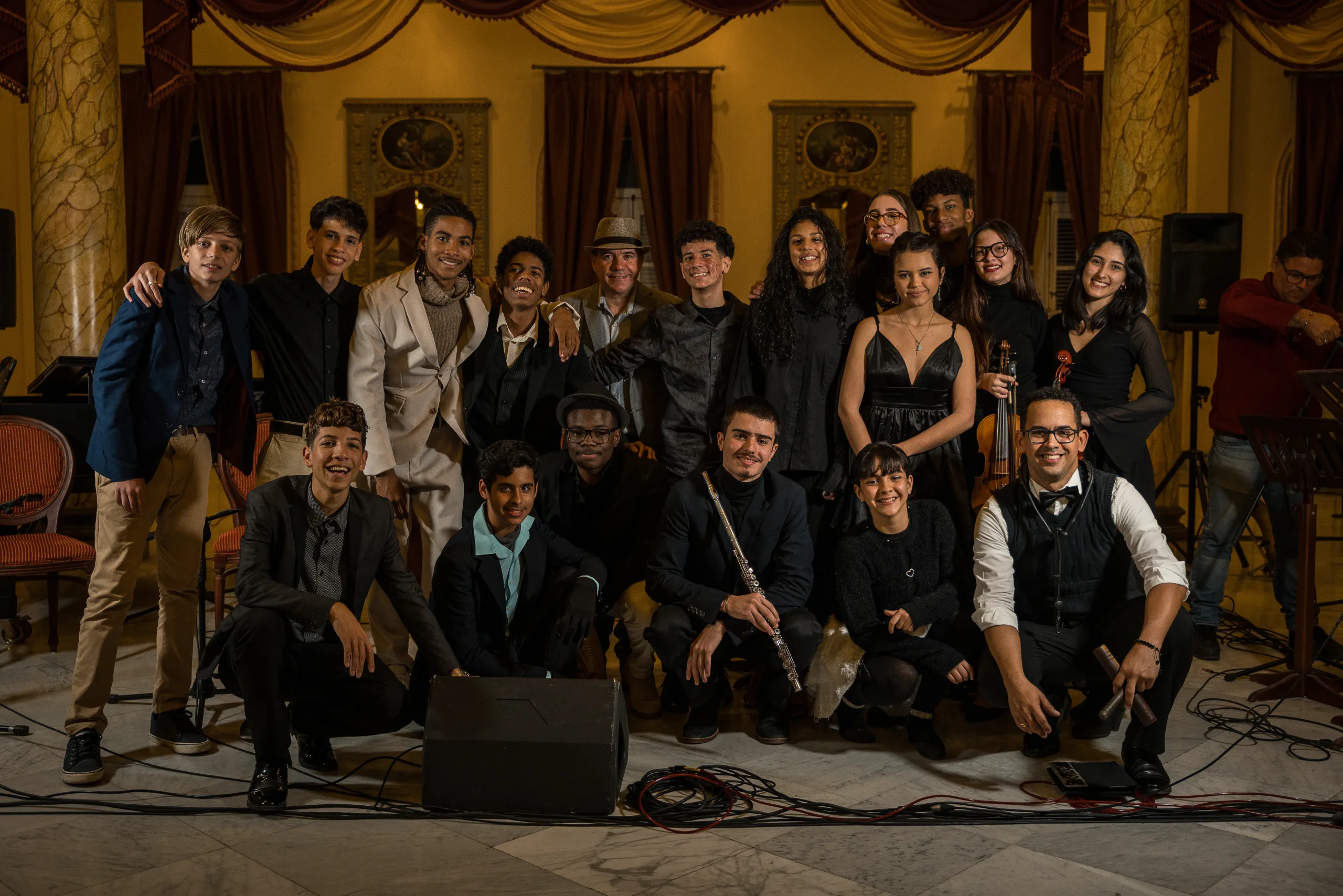
In a context where cultural consumption tends toward homogenization and immediacy, the National Music Contest -an initiative of the Fondo de Arte Joven (FAJ) supported by UNICEF Cuba- is committed to broadening the sensitive and creative horizons of Cuban teenagers. More than a competitive contest, the project has fostered the creation of an ecosystem that brings together master classes, training sessions and mentoring processes led by key figures of the country's music scene. Throughout its two editions, students between 12 and 18 years old, from 13 provinces, found a space for learning through inclusion and accompaniment.
On the other hand, popular musics have ceased to be the appendix of the academy to position themselves as the north of a map that is expanding more and more strongly. At its center are aligned the technique and an incarnated knowledge of the sound roots capable of recognizing beauty both in the rigor of a score and in the freedom of a download. On February 1, that premise took shape in a list of young performers with academic or self-taught careers, which revealed a paradigm shift in the way of cultivating, transmitting and thinking about music on the island.
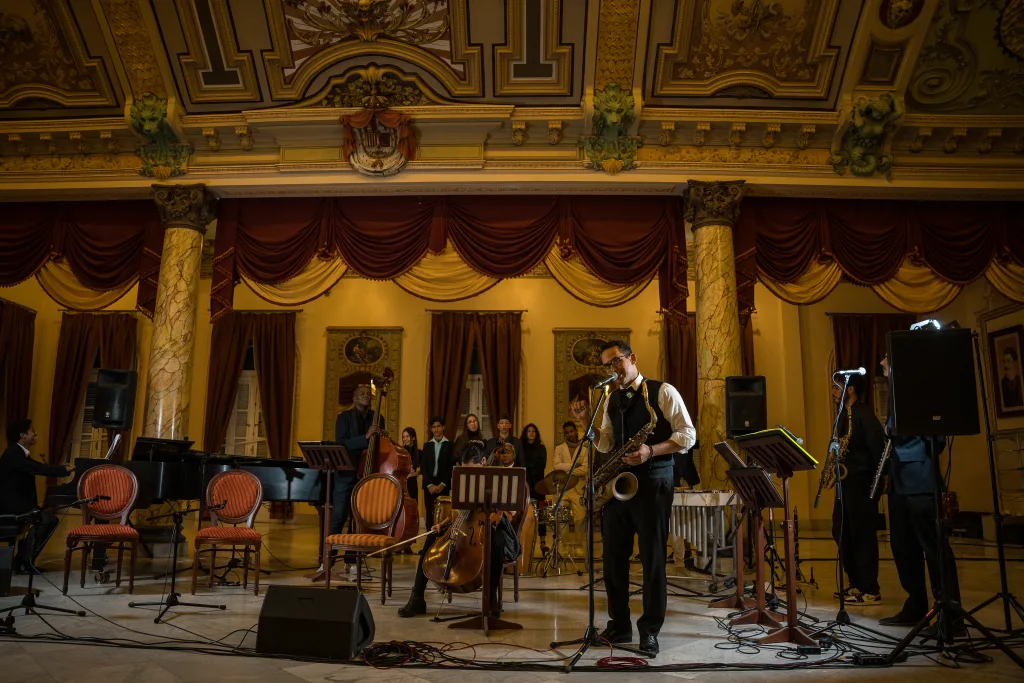
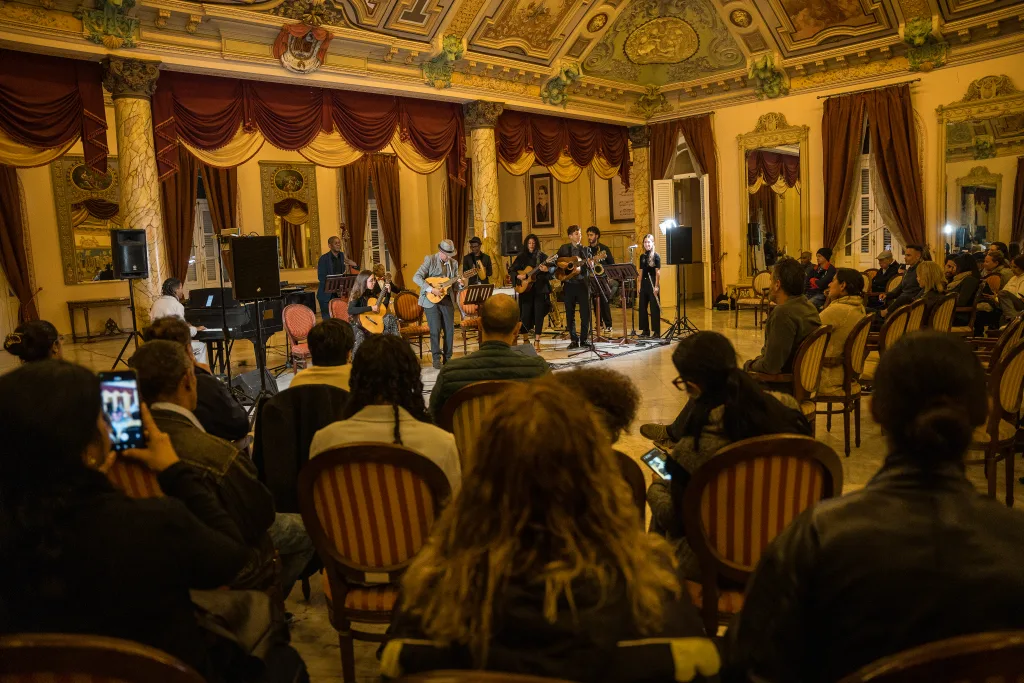
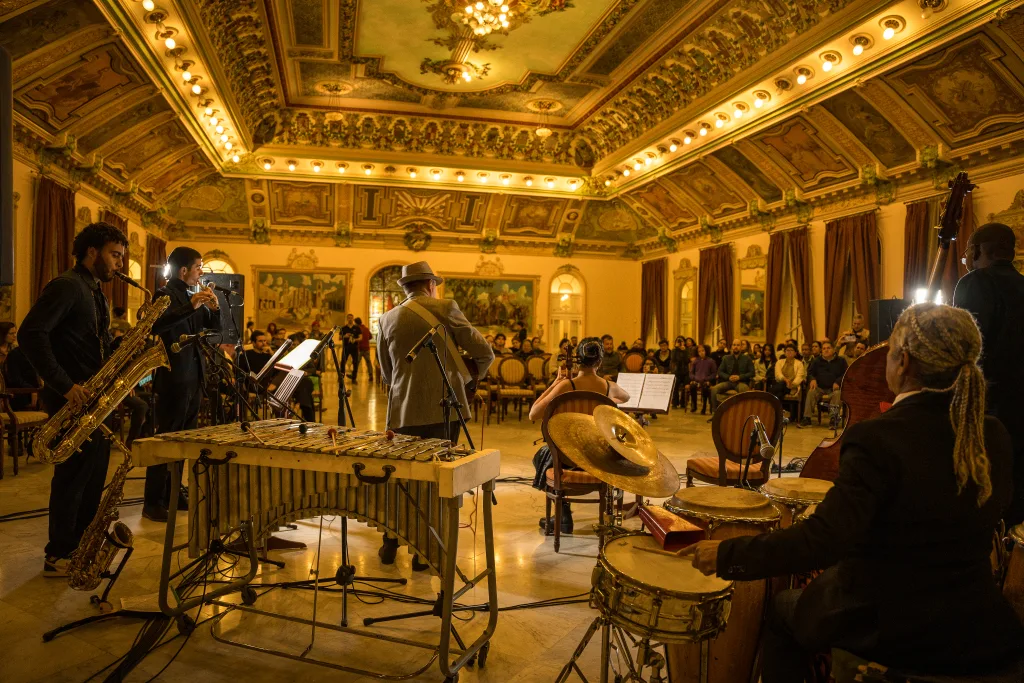
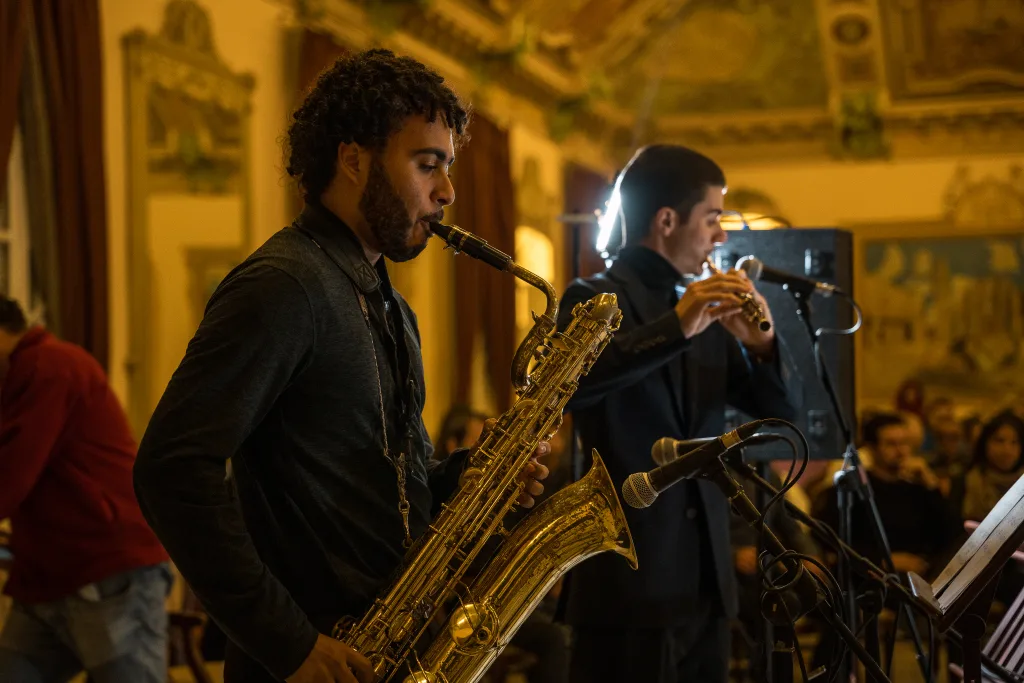
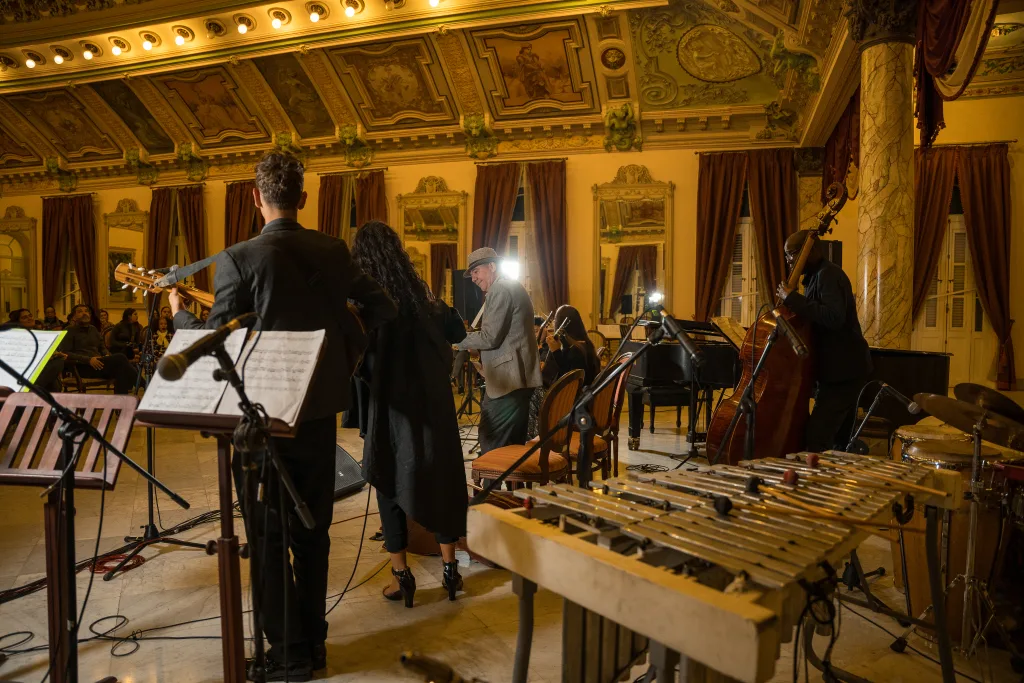
The new generation was the title of the concert held within the framework of the 41st Internationala edition of the Jazz Plaza International Festival, starring precisely the winners of the first two editions of this event. Chance -or perhaps the urgency of art itself- forced a last-minute change: from the Tito Junco Hall of the Bertolt Brecht Cultural Center to the Ignacio Cervantes Hall, which, turned into a temple for these «little giants», was paradoxically illuminated, while the city was left in darkness. Under the artistic direction of wind multi-instrumentalist Janio Abreu -who has accompanied the Competition since its inception and whose pedagogical work is as relevant as his virtuosity-, and who, in addition to being in charge of several of the arrangements performed during the evening, conceived a staging under the impression of thinking of Cuban genres and jazz as fields of study with the same rigor, complexity and legitimacy as «classical music».
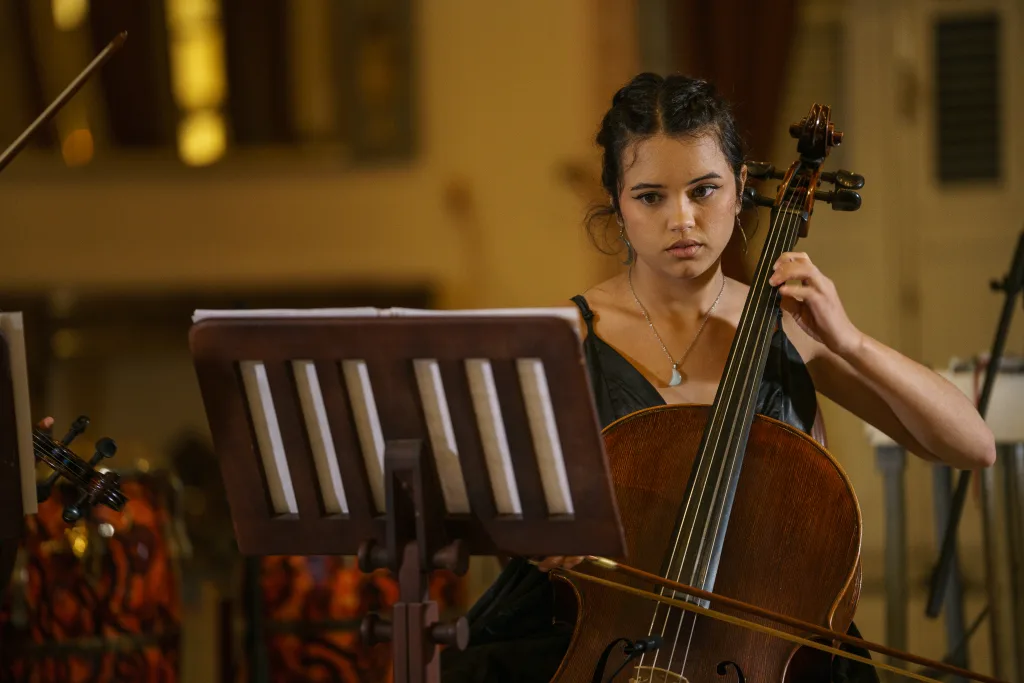
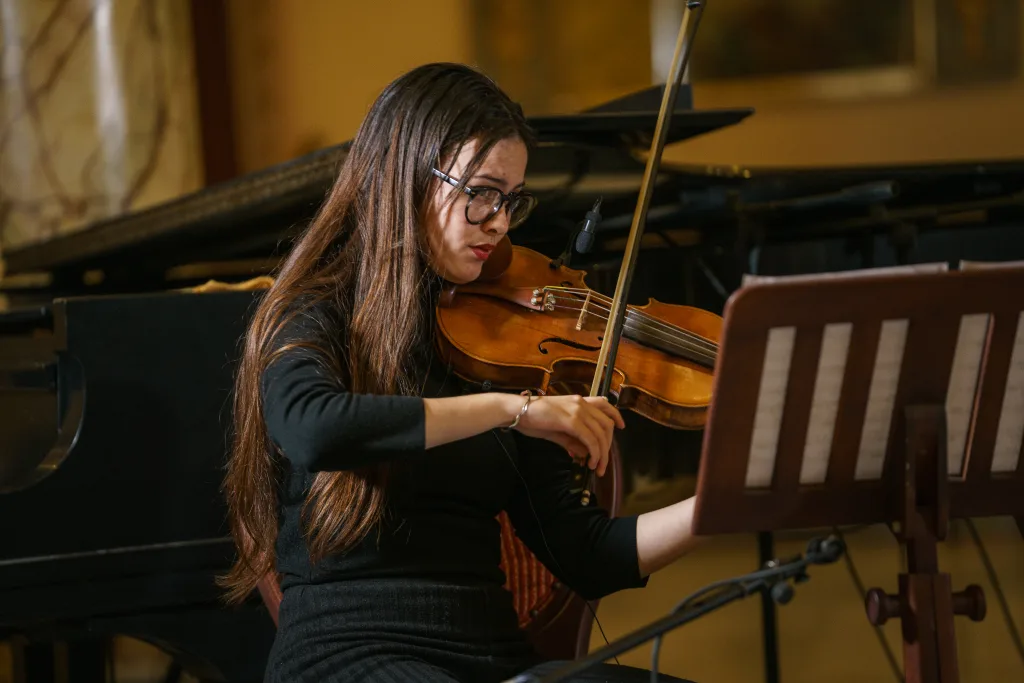
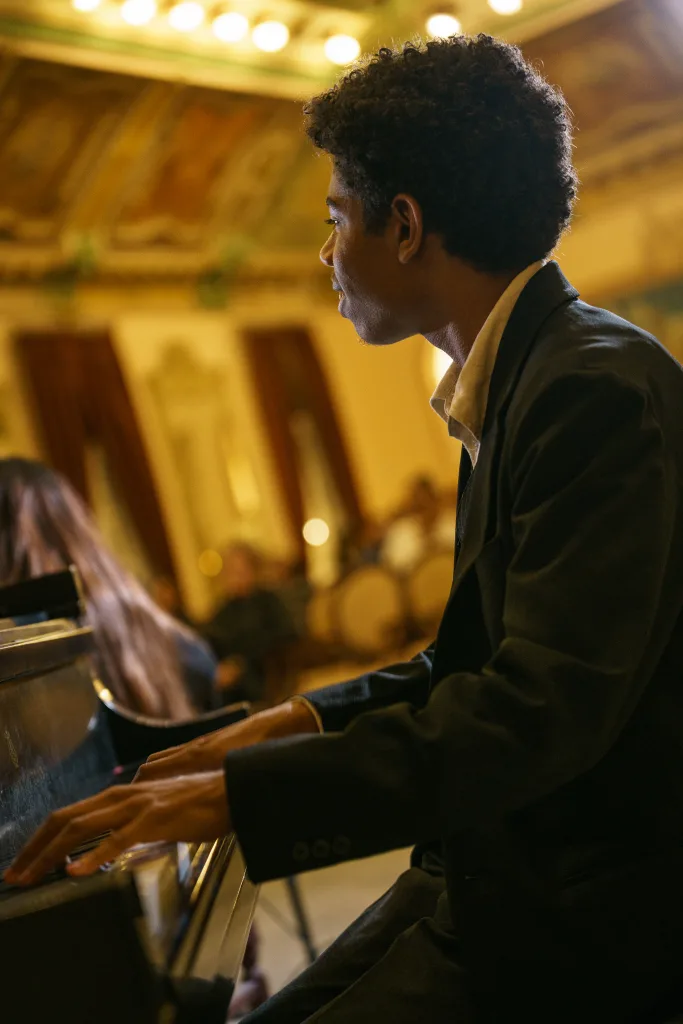
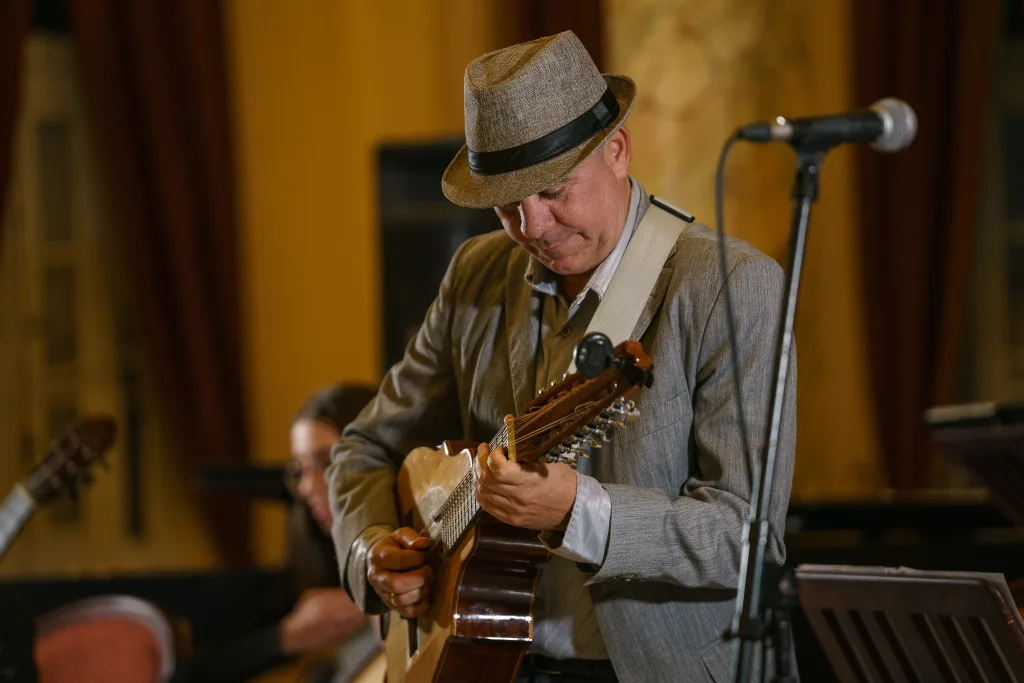
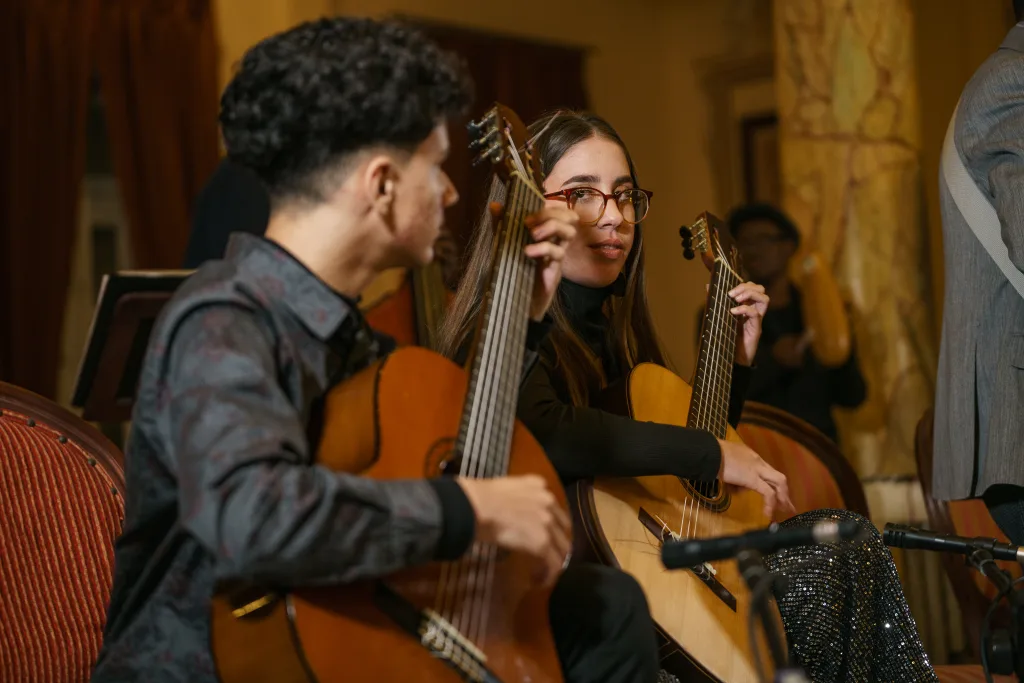
The design of the program, accompanied by musicians of extensive experience -Roldán Carballoso on lute, Adel González on percussion and Pedro Pablo Gutiérrez on double bass- eluded any logic of accumulation to place a subtle dramaturgy, organized in pauses, contrasts and emotional twists and turns. Three for two, by James Rae, opened the concert as a true prelude: the string quintet made up of violinists Eva Lorena Pérez and María del Pilar Pérez, violist José Anthoni Ortiz, cellist and winner María Karla Rifat and maestro Pedro Pablo Gutiérrez, established the listening climate from the very beginning. From that initial contention, Wine and bicycle -a work by Diego Abreu, one of the winners of the competition- unfolded a melody of great delicacy. The piece, sustained by a writing of remarkable pianistic maturity, confirmed that in this new generation age, far from seeming to be an aesthetic limit, imposes itself with the naturalness of those who think music from experience.
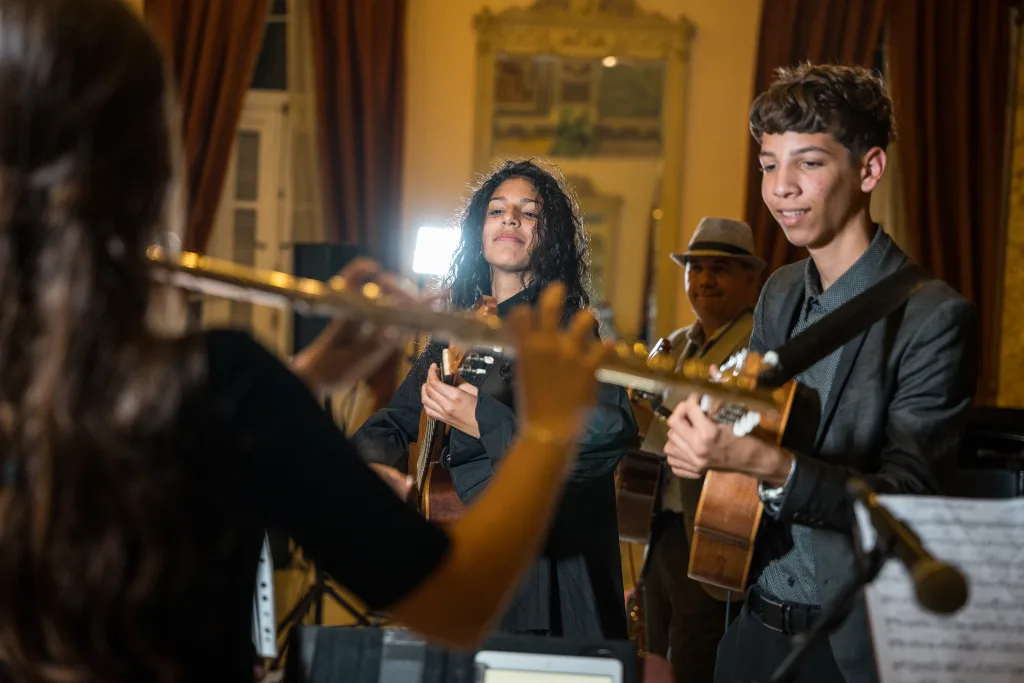
The program progressed alternating moments of high technical intensity with areas of expressive withdrawal. At Alborada guajira, The interaction between the young people was vital: guitarists Natalia Hernández and Armando Moreira -both winners of the contest- together with Ihara María Rosales and José Eduardo Rodríguez on the tres, built a complicity that combined dexterity, precision and energy, showing the fluency with which Roldán teaches his students.
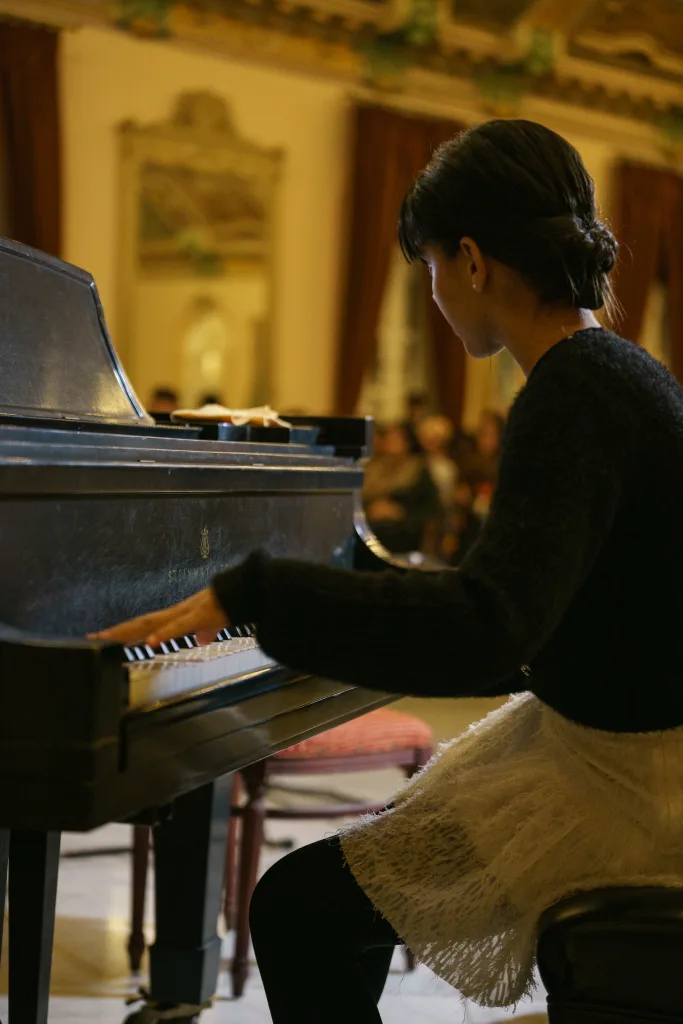
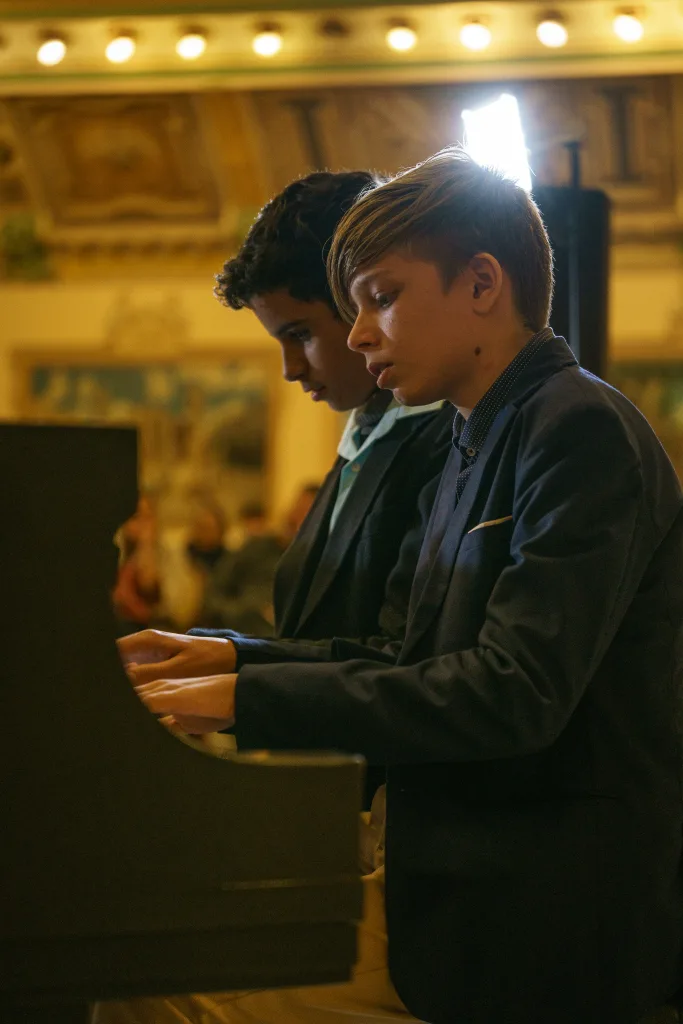
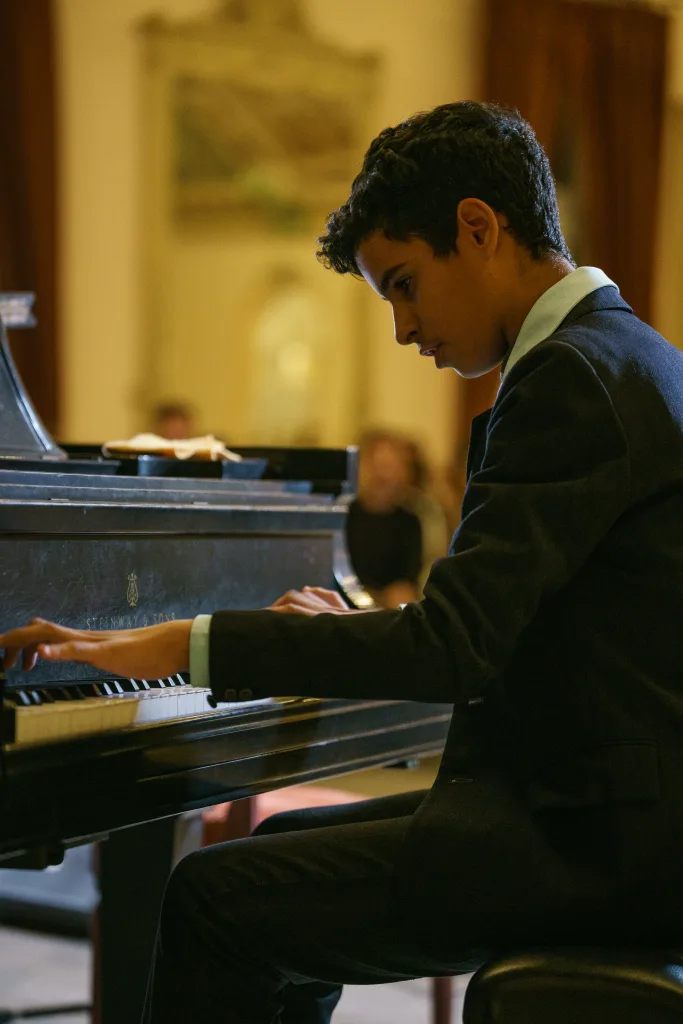
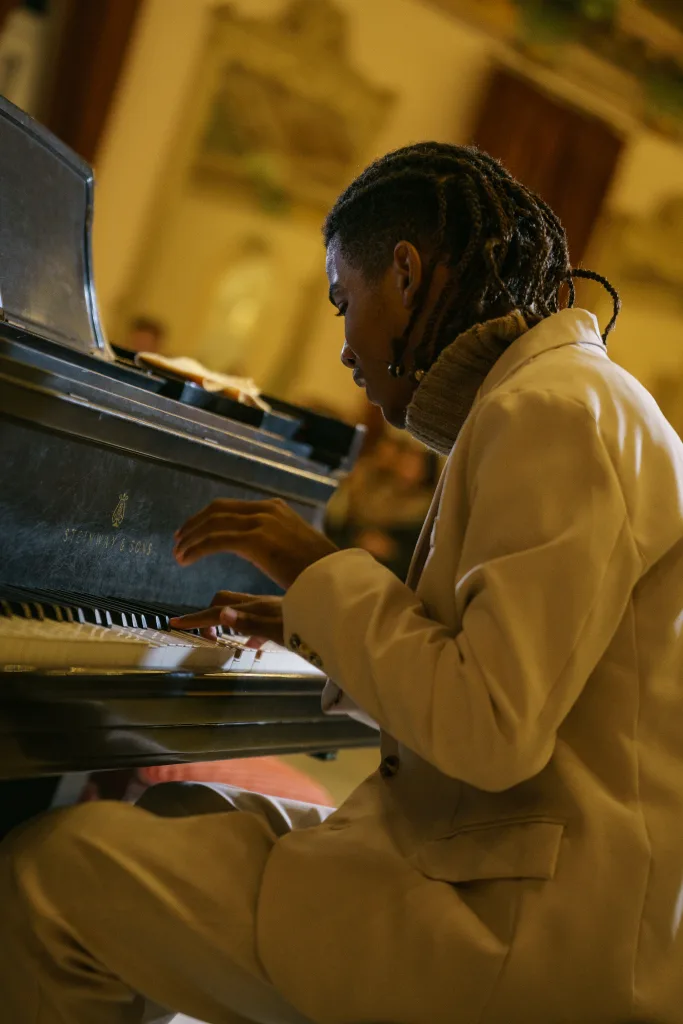
Caribbean, by pianist Alejandro Falcón, in an arrangement for four hands performed by Esteban Hernández and Álvaro Pérez, offered timbral and expressive contrast. The play of hands on the keyboard created textures that dialogued with the audience's breathing and provided a moment of cooperation between the performers. For his part, Post and guest, for solo piano, proposed one of those necessary pauses that reorganize the perception of the whole. Ernán López-Nussa's work, interpreted by Álvaro Pérez, with its lucid wink to the imaginary of the silent films of the 1920s, suspended for a moment the impulse of the night to focus listening on the narrative dimension of the instrument.
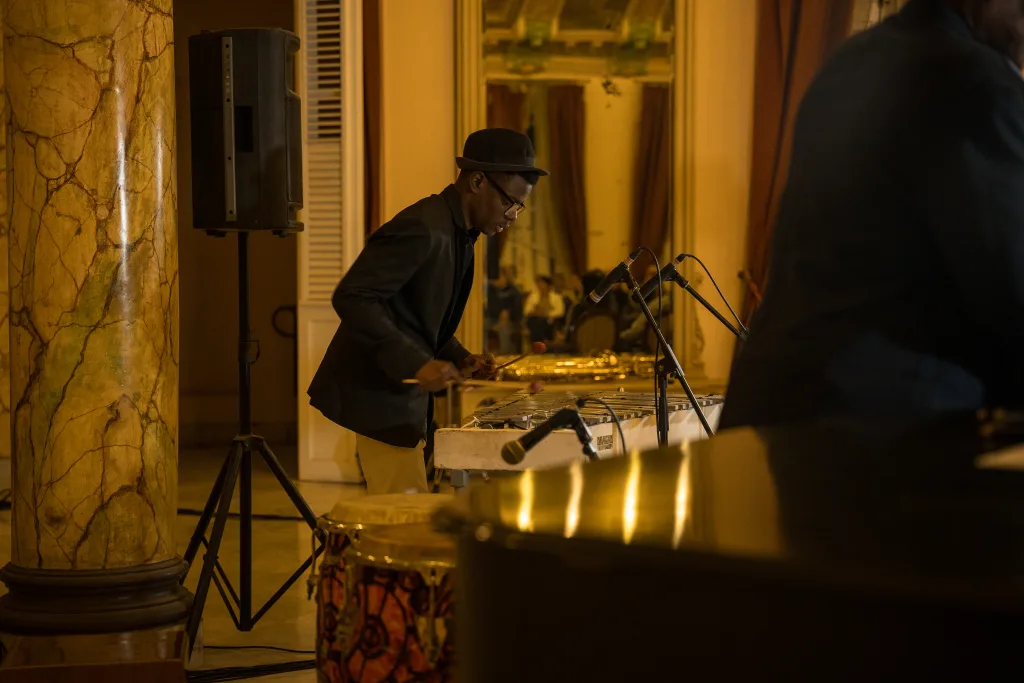
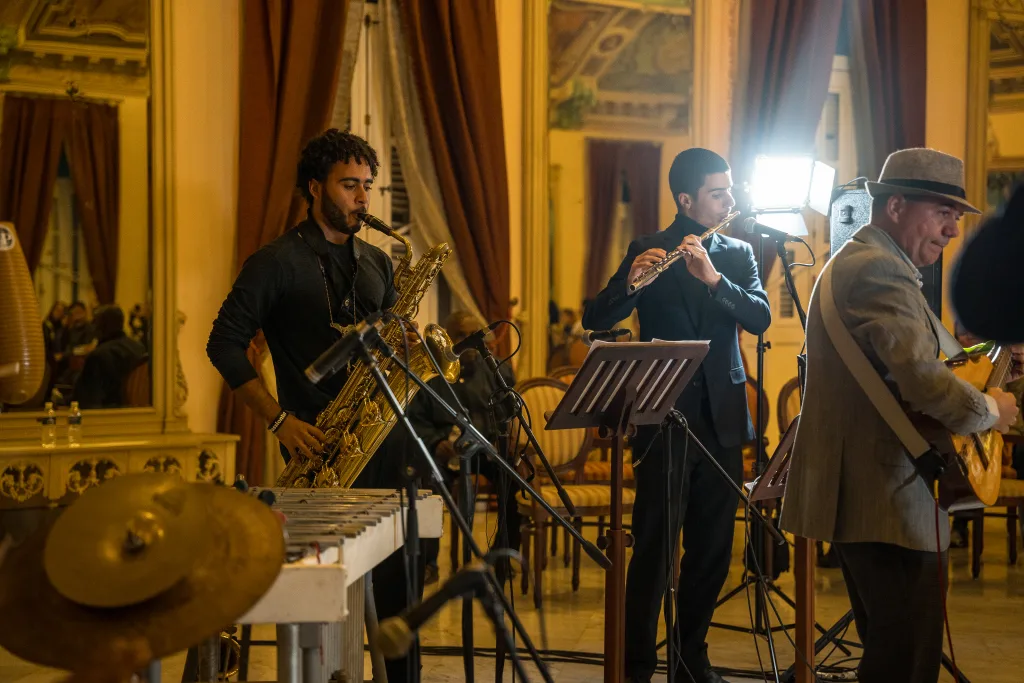
The same constellation of moderate tempos and nostalgic affections were integrated into this constellation. Cubanita -a work by Aldo López-Gavilán, originally conceived for solo piano as an academic exercise for his daughter Andrea— y Cinema Paradiso, Ennio Morricone's famous theme that accompanies the Italian film of the same name by Giuseppe Tornatore. At Cubanita, the work written by a father for his daughter found its mirror on stage right in the hands of Paola Abreu at the piano and her father Janio on the saxophone. While in Cinema Paradiso we witness the re-reading of the cinematographic reference and its famous soundtrack, enriched by the vibraphone played by the young Elías Alexander Ferrer.
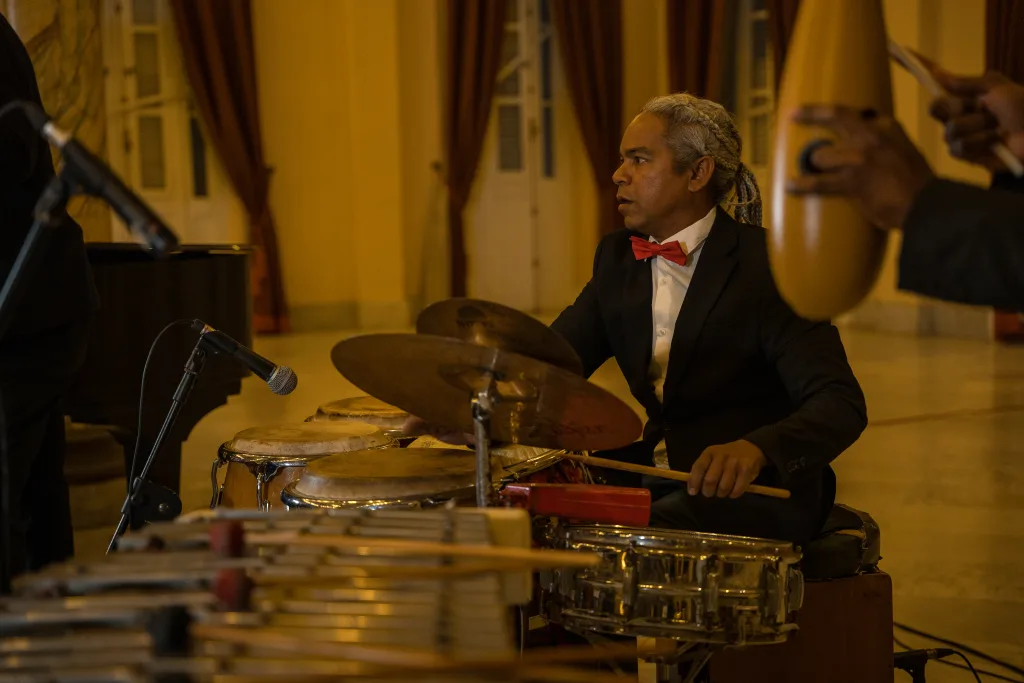
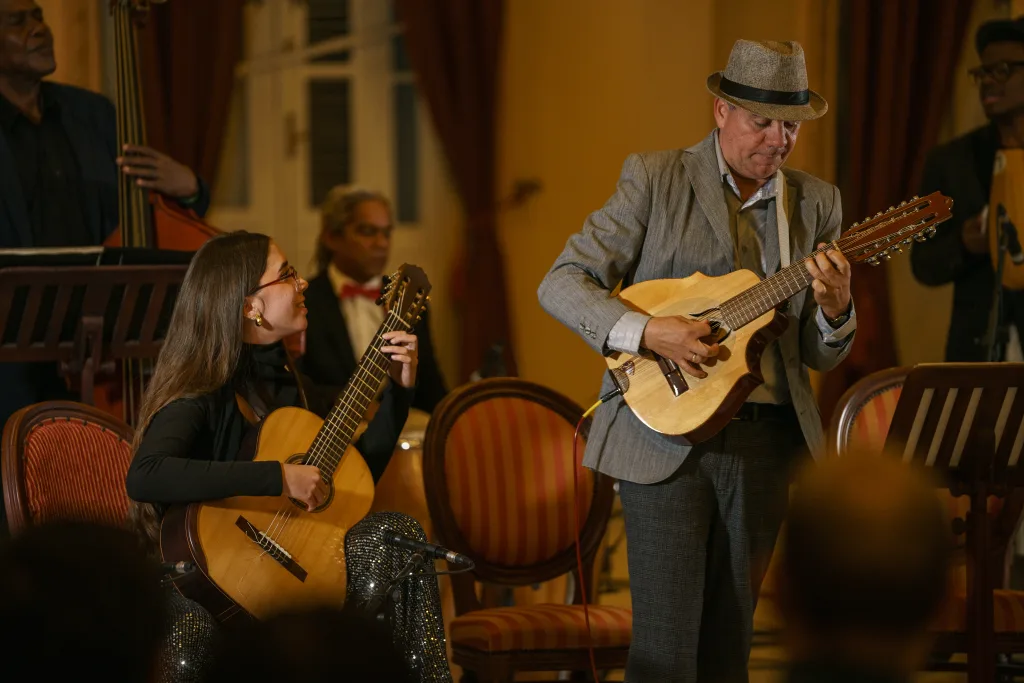
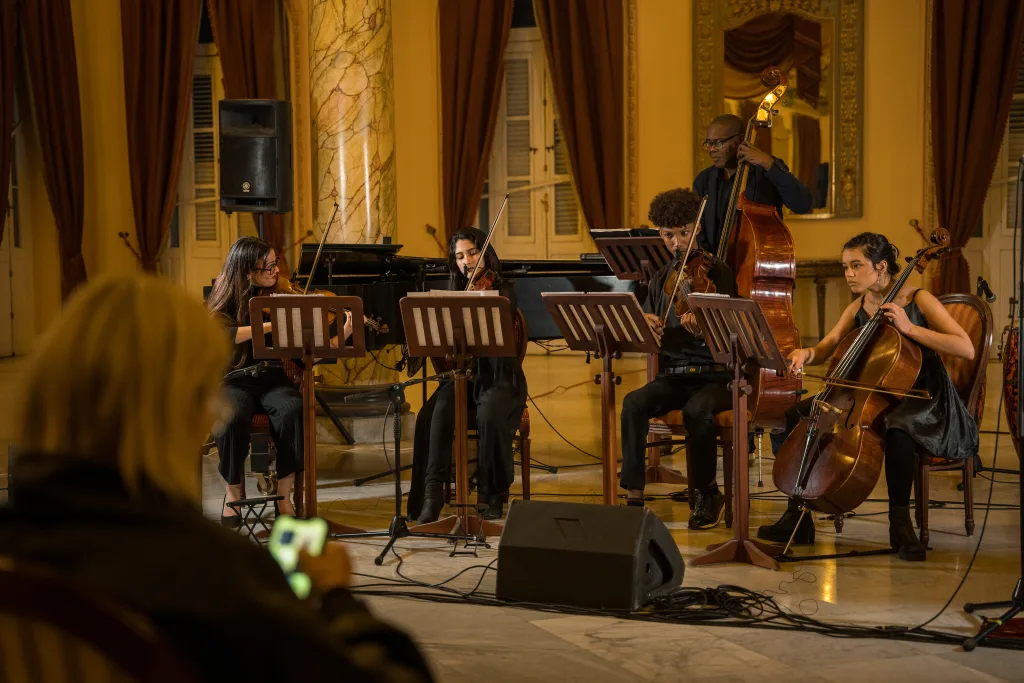
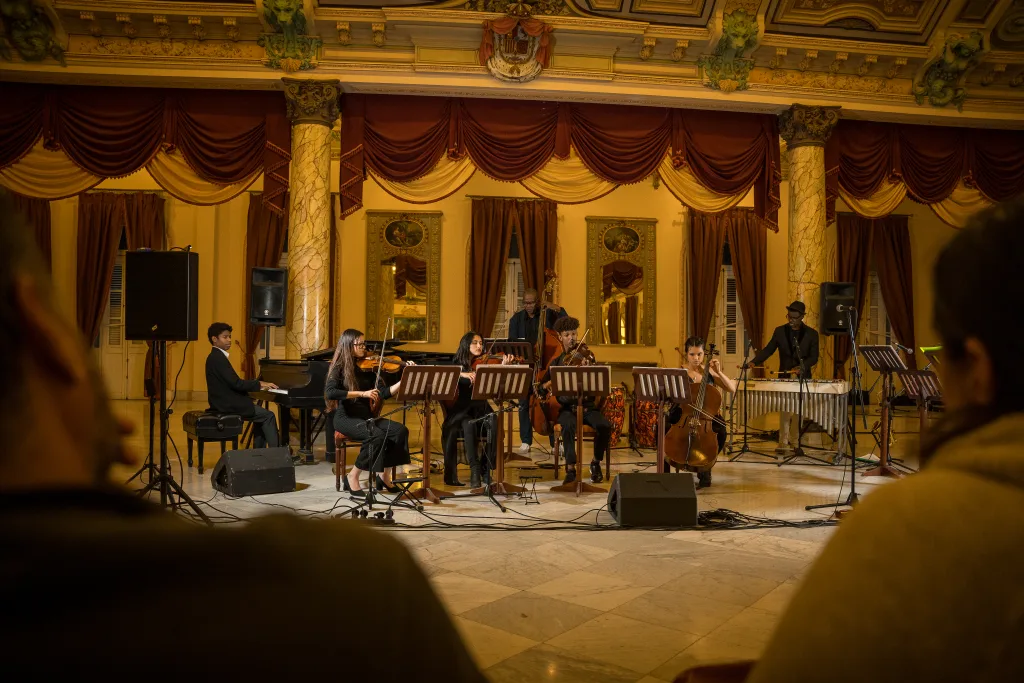
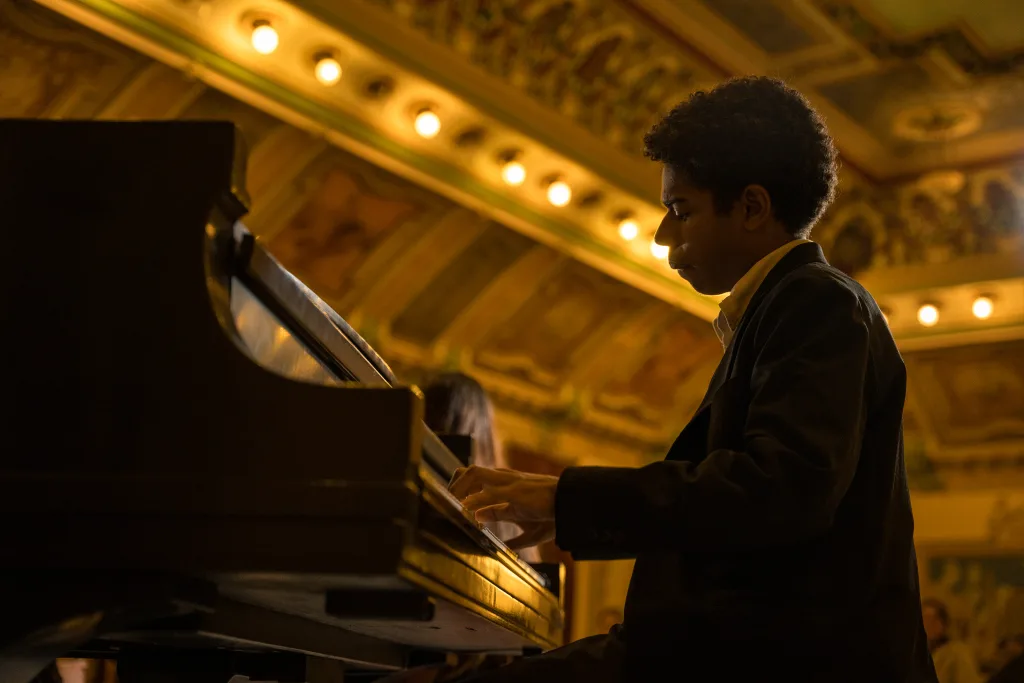
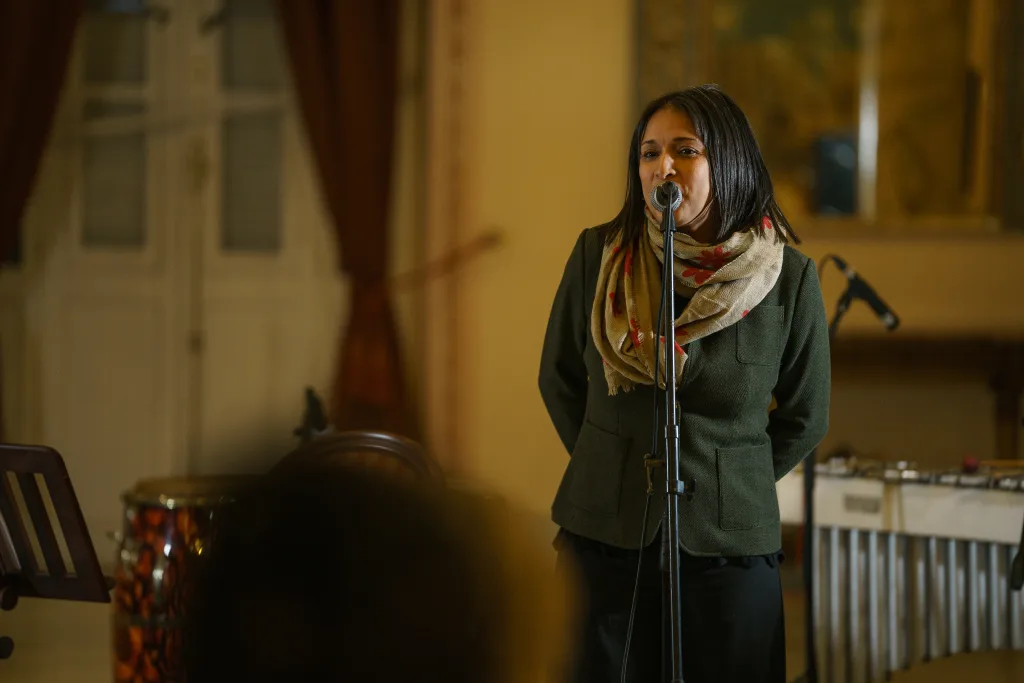
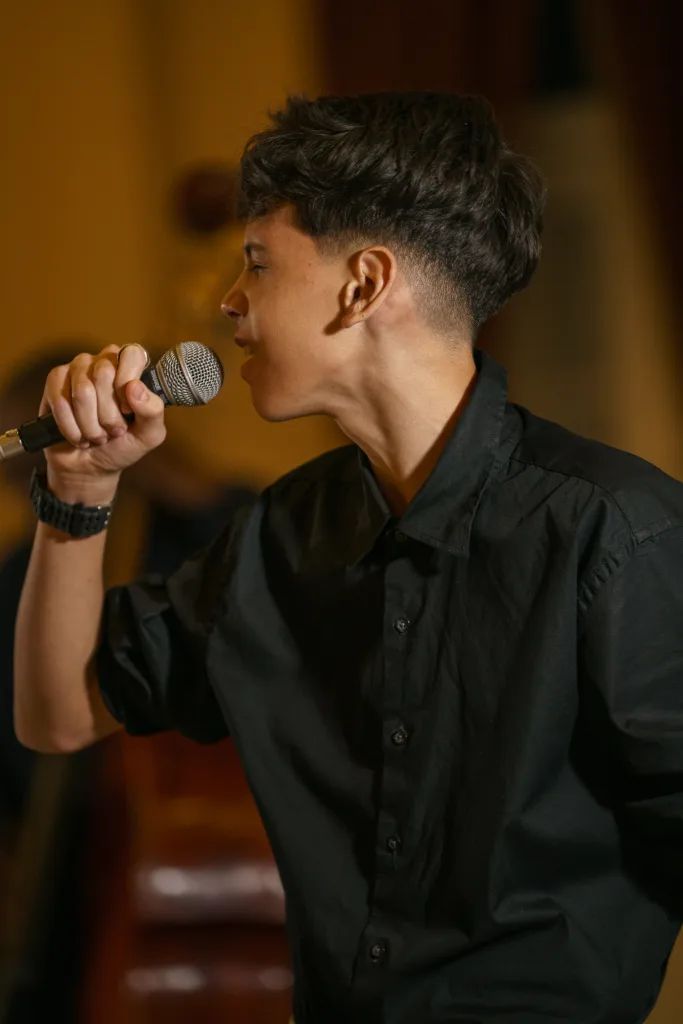
A turning point came with Let's walk, by Félix de Jesús Matos, the only work in the program that incorporated the voice. Its presence activated a different frontality, reinstalling the music in its most direct communicative dimension. From there, the concert resumed the pulse with works of high technical complexity where the individual protagonism emerged within a logic of shared interpretation, with moments of special pianistic lucidity, such as the one assumed by Ronny Yunior López in Tumbao pal Benny.
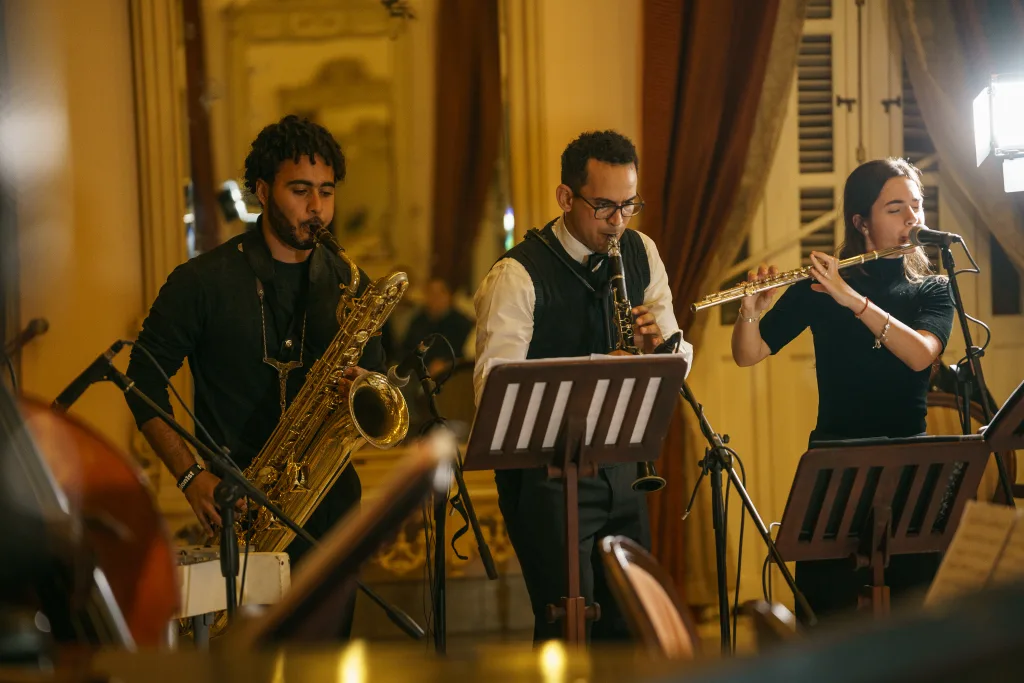
The concert, far from any historiographic rigidity, also showed its commitment to Cuba's musical heritage by quoting Alberto Socarrás, who was the first musician in the history of Latin jazz to record a flute solo. Socarrás was heard that night in his versions of Caravan -the famous standard composed in 1936 by Juan Tizol and Duke Ellington -and You and I, both transcribed by Abreu himself. At Caravan, Alessa Blanco Bencomo (flute) and Vismar Suárez (saxophone) not only demonstrated mastery in their performance but also sufficient interpretative maturity to navigate the rhythmic-expressive architecture of this work. While flutist Darío Cuba, fully aware of his place in this lineage, played his instrument with the responsibility of sustaining a living tradition.
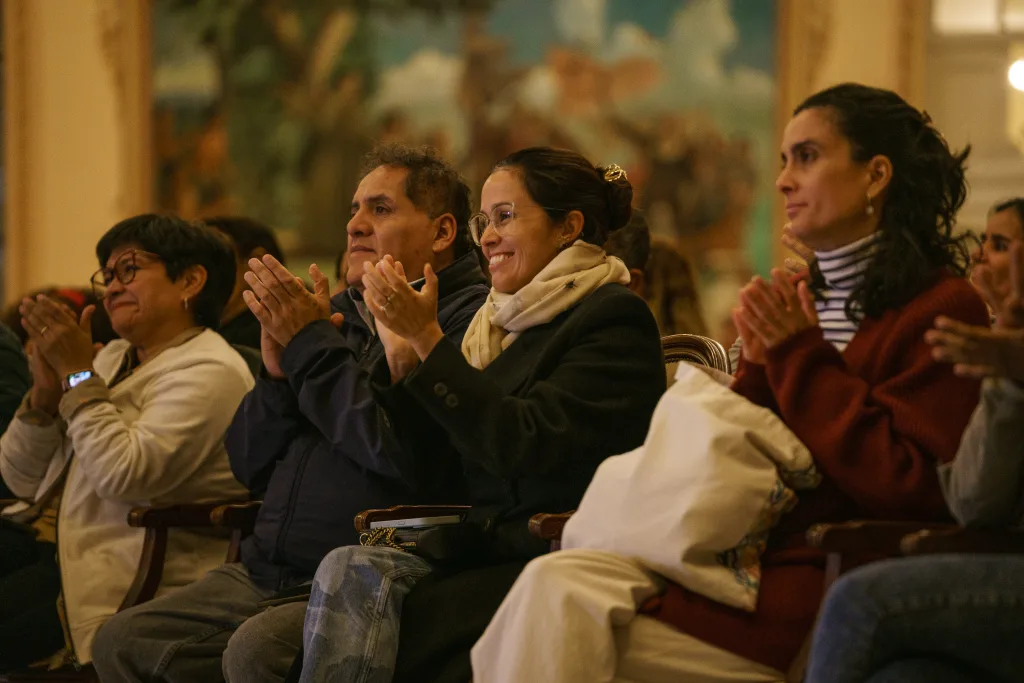
In this framework, in which the stage is revealed as the place where musical knowledge circulates and accumulates, Give it a chance was the piece chosen to close the concert, precisely with the participation of all the musicians. More than an emphatic closing, the piece functioned as a meeting space where individualities came together, and in that collective dialogue a truth is manifested: what is, ultimately, Cuban music, if not a constant return to the origins? Not a nostalgic return, but a return to rewrite, to update, to make room for new voices. This is the threshold of this concert, in which parents, teachers and event managers integrated in the same atmosphere, corroborated that the development of the young artist is not a solitary act. The «major talent» is at the service of the «emerging talent», from the generosity of those who know that music only transcends if it is delivered with affection.
Havana, February 2026
 English
  Español
  Français
  Deutsch
  Italiano